
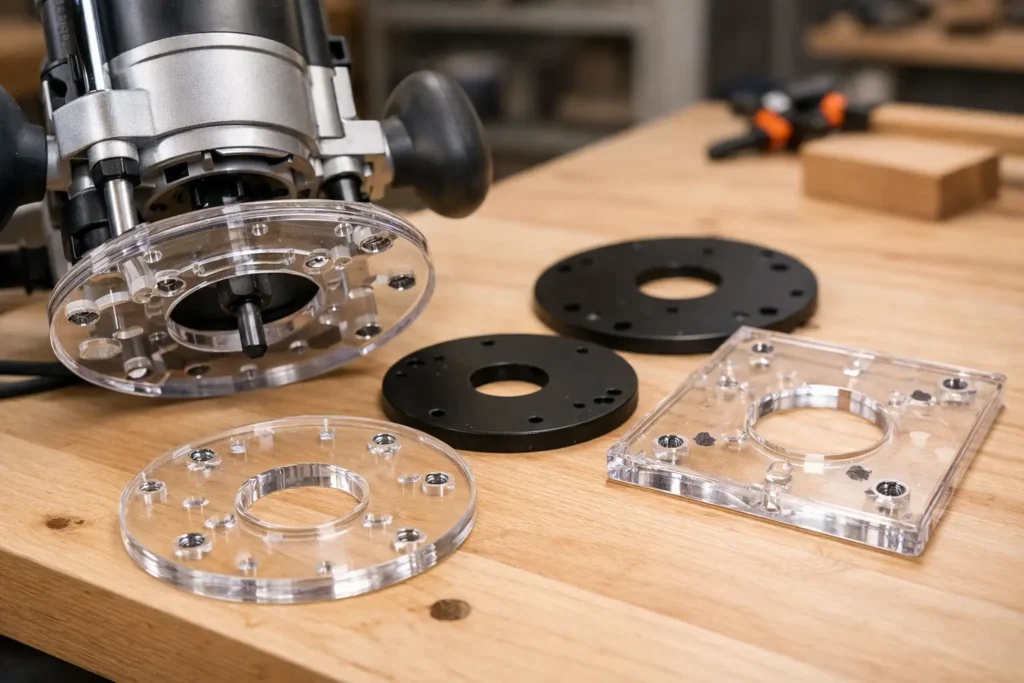
A handheld router can only cut as accurately as the surface guiding it. So, what is a router subbase? It is the flat plate mounted to the bottom of the router. The subbase rides on the workpiece, supports the tool during a cut, and provides the opening that lets the bit pass through the base.
Many routers come with a factory subbase made from clear plastic, metal, or a combination of materials. For ordinary edge profiling, that stock part may be all you need. But when you are routing from templates, making jigs, cutting inlays, or working close to an edge, an upgraded router subbase can make the tool easier to control and more accurate.
The key is fitment. A subbase is not a universal accessory simply because it looks similar to another plate. The screw pattern, centering arrangement, base diameter, switch clearance, handle clearance, and bit opening must work with your exact router model.
What Is a Router Subbase Designed to Do?
The subbase creates the router’s contact surface. It spreads the router’s weight across the workpiece and gives you a smooth, stable platform to move across wood, a template, or a jig. A flat subbase helps prevent the router from rocking, tipping, or catching at the edge of a cut.
It also establishes the relationship between the router bit and any guide you use. If you run the subbase against a straightedge, fence, template, or guide bushing, the dimensions of the plate affect where the bit cuts. A centered bit opening and a properly installed plate matter whenever layout accuracy is tight.
The factory base is often designed for general-purpose use and compact packaging. An aftermarket baseplate may be larger, thicker, clearer, or configured for a specific operation. That does not make every replacement automatically better. It means the plate can be selected for the way you actually use the router.
Subbase, Baseplate, and Router Base: Are They Different?
In woodworking, these terms are often used interchangeably. A router subbase usually refers to the removable plate fastened underneath the router’s fixed or plunge base. A router baseplate generally means the same component, particularly when referring to a replacement or upgraded plate.
The router base itself is the larger metal or molded assembly that holds the motor and handles. The subbase is the wear surface attached below it. On some routers, the distinction is obvious because the factory plate is a separate clear plastic piece. On others, the terms are used more loosely.
For purchasing purposes, focus less on the label and more on compatibility. Confirm the router brand and model, then verify that the plate’s mounting holes and features match your tool.
Why a Larger Router Subbase Can Help
A common upgrade is a larger-diameter subbase. More surface area gives the router better support, especially when part of the base is hanging over an edge, a narrow rail, or the opening of a workpiece. This is useful for routing dados in cabinet sides, flattening small areas, or cutting profiles on narrow stock.
A larger plate can also improve template routing. When the subbase rests evenly on a template, the router is less likely to tilt as you move along the pattern. That helps keep cuts consistent around curves and corners.
Clear acrylic-style plates have another practical benefit: visibility. Being able to see the bit, layout marks, and template edge through the base makes setup easier. This is especially helpful for inlay work, letter routing, hinge mortises, and stopped cuts.
There are trade-offs. A large subbase may not fit into tight spaces, and it can interfere with fences or jigs designed around the original base diameter. A thick plate slightly reduces available bit projection, which matters when using short-shank bits or routing deeper material. Choose the size and material around the job, not just the biggest plate available.
Features That Matter When Choosing a Router Baseplate
The mounting pattern comes first. Router manufacturers use different screw locations, countersink styles, and centering methods. Even routers from the same brand can use different patterns across model lines. Never assume a plate fits because it is listed for a familiar brand name.
The bit opening is the next decision. A smaller opening supports more of the workpiece near the bit, which can be useful for thin material and small cutters. A larger opening allows bigger bits, including panel-raising, pattern, and mortising bits. The opening needs enough clearance for the bits you plan to use, but excessive clearance gives up support near the cut.
Guide bushing compatibility matters if you use templates. Many woodworkers want a subbase that accepts standard guide bushings for routing duplicate parts, dovetail jig work, hinge templates, and inlays. Check whether the plate is pre-drilled for the bushing system you own or whether it requires an adapter.
Material affects durability and feel. Clear acrylic or polycarbonate-style plates provide visibility and slide well over smooth stock. Phenolic plates are rigid and durable. Metal plates can be strong but may obscure the cut line and can mark delicate surfaces if the edges are damaged. A well-made plate should be flat, have smooth edges, and use properly countersunk mounting holes so screw heads sit below the surface.
How to Match a Subbase to Your Router
Start with the router’s exact model number, not just the manufacturer. The model number is usually found on the motor housing, nameplate, or original documentation. This is the fastest way to avoid ordering a plate with the wrong hole pattern.
Then identify your router configuration. A fixed base and plunge base from the same router system may use different subbases. If you own both, confirm which base needs the plate. Also note whether your router has features that need clearance, such as a dust port, edge guide attachment points, or a protruding depth adjustment mechanism.
Before installing a replacement, compare it with the factory plate. Check the screw count and spacing, the diameter of the mounting screws, the countersink direction, and the location of the bit opening. Do not force screws into holes that do not align. A plate that is slightly off-center or under tension can affect accuracy and may damage the router base.
For a nonstandard setup, a custom baseplate can be the practical answer. Older routers, specialty routers, modified bases, and shop-made jigs may need a specific mounting pattern, outside shape, or guide-bushing opening. Provide the router model and the dimensions or function you need before ordering.
Installing and Centering the Plate
Unplug the router before removing the existing subbase. Remove the mounting screws, keep them organized, and inspect the screw heads and threads for wear. If the new plate does not include hardware, use screws that match the router’s original thread size and length. Screws that are too long can interfere with internal components; screws that are too short may not hold securely.
Install the plate loosely at first. Centering is most important when you will use guide bushings or rely on the outside edge of the plate for template work. A centering cone or centering pin can align the subbase opening with the router collet before you tighten the screws. If you do not have one, install a straight bit and carefully check that the bit appears centered in the opening while the router is unplugged.
Tighten the screws evenly. Then set the router on a known-flat surface and make sure the plate sits flush with no raised screw heads, wobble, or debris trapped underneath. A small wood chip under the plate can create a surprising amount of error in a precision routing operation.
When You Should Replace the Factory Subbase
Replace a damaged subbase if it is cracked, warped, deeply scratched, or no longer sits flat. A rough or chipped edge can catch on a template or leave marks on finished material. If the mounting holes have become enlarged, the plate may shift during use and should not be trusted for accurate work.
An upgrade also makes sense when your projects call for better support, clearer sight lines, guide-bushing capability, or a dedicated jig configuration. A cabinetmaker using a hinge template has different needs from someone rounding over shelf edges. The right plate is the one that improves the operation without creating clearance problems elsewhere.
A router subbase is a simple part, but it is where the router meets the work. Match it to your exact router, install it flat and centered, and let the baseplate support the kind of cuts you want to make.