
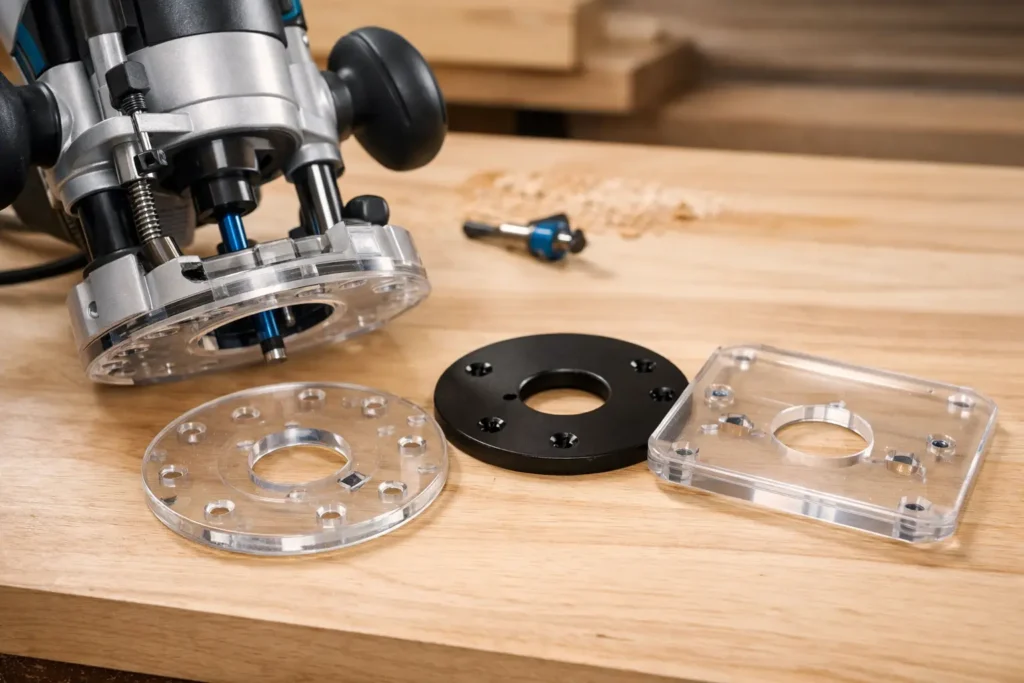
A router baseplate is a simple upgrade, but it affects nearly every cut you make with a handheld router. The right plate gives the router a broader, flatter bearing surface, improves visibility around the bit, and makes it easier to keep the tool stable at an edge, inside a template, or on a narrow workpiece. The wrong plate can create mounting problems before the router ever reaches the wood.
For most buyers, compatibility comes first. Start with the router you own, then select a baseplate made for that router’s mounting pattern and body shape. A plate that looks close is not necessarily a proper fit. Screw locations, recess depth, center-hole size, and clearance around switches or housings can vary significantly between router brands and even between models from the same brand.
Start With Router Baseplate Compatibility
Remove the existing factory base or inspect its underside before ordering. Confirm the router brand and model number from the tool’s identification label, not from memory or a similar-looking router in the shop. If the router has been discontinued, compare the mounting-hole layout, base diameter, and screw type against the information available for the replacement plate.
A purpose-built baseplate should sit flat against the router base without forcing the screws into alignment. It should also center accurately on the bit opening. If the plate is off-center, a guide bushing, circle jig, or template setup can produce cuts that are consistently wrong even when the layout is correct.
Do not assume that a universal plate is the best answer. Universal options can work for some applications, but the added adjustment may introduce compromises in fit, centering, or screw selection. A router-specific plate is usually the faster and more reliable choice when one is available.
If your router has a nonstandard modification, an older mounting pattern, or a specialized use, provide clear measurements and photos when requesting a custom order. The most useful details are the router model, the diameter of the original base, center-hole diameter, screw-hole spacing, and the intended application. Custom work is most effective when the mounting requirements and the job requirements are both clear.
Choose the Plate Size for the Work
Baseplate diameter is not just a matter of appearance. A larger plate spreads the router’s weight across more material. That added support helps prevent the router from tipping when routing along a board edge, trimming thin stock, or crossing a gap in a jig. It is especially useful for template routing, sign work, inlay routing, and operations where a small factory base does not provide enough contact area.
The trade-off is access. An oversized plate may be less convenient inside a tight cabinet opening, close to a fence, or around a compact fixture. For general bench work, extra surface area is usually an advantage. For confined work, choose a size that still gives you stable support without blocking the path of the router.
Clear material is popular because it lets you see the bit, layout line, and template edge. That visibility is valuable when starting a stopped groove, following a pencil mark, or working with small inlay parts. Clear material will still collect dust and can develop scratches over time, so keep expectations practical. The main benefit is better sightlines, not permanent showroom clarity.
The center opening also matters. It must provide adequate clearance for your bits and any guide bushings or accessories you use. A larger opening offers more room around larger bits, while a smaller opening can provide more support close to the cut. The best choice depends on the work. If you regularly use guide bushings, confirm that the plate is designed to accept the bushing system you intend to use.
Common Jobs That Benefit From a Larger Base
Template work is one of the clearest examples. When the baseplate rides on a template, a wide plate reduces the chance of rocking at the edge and helps keep the cut consistent. The same applies to pattern routing on narrow parts, such as drawer components, curved trim, and small furniture pieces.
Circle-cutting jigs benefit from a stable, accurately centered plate because the pivot point and bit location must remain predictable throughout the cut. Inlay work also benefits from a plate that accepts the required guide bushing cleanly and keeps the router steady over small, detailed shapes.
For edge profiling, the improvement may feel less dramatic, but it still matters. A wider baseplate gives you more control when the router is balanced on a narrow edge or when a bearing-guided bit enters and exits the cut. It does not replace safe hand position or proper stock support, but it gives the tool a better platform.
Check Mounting Hardware Before Installation
A baseplate can only perform correctly when it is installed correctly. Use the proper screws for the router and plate. Screws that are too long can bottom out or interfere with internal components. Screws that are too short may not provide sufficient thread engagement. If a screw sits proud of the plate surface, it can scratch a template or prevent the plate from sitting flat on the work.
Before tightening fully, start all screws by hand and make sure the plate is seated evenly. Tighten them gradually in an alternating pattern rather than fully tightening one screw at a time. Once installed, inspect the underside for flush hardware and rotate the router bit by hand, with the router unplugged, to confirm there is no interference.
Centering deserves a separate check. Some router bases allow slight adjustment before the screws are fully tightened. If you use guide bushings, install the bushing and use an appropriate centering method before final tightening. This step is worth the few extra minutes. A centered plate helps ensure that templates, hinge jigs, and mortising fixtures produce results that match your layout.
Set Up the Router for the Job at Hand
A better baseplate improves control, but it does not correct a poor routing setup. Support long stock so it cannot shift, clamp templates firmly, and make test cuts in scrap when fit matters. For a deep profile or mortise, use multiple passes rather than forcing the bit to remove too much material at once.
Pay attention to the direction of travel. Standard routing direction is against the bit rotation, which gives the operator more control. Climb cutting can have a place for light cleanup passes in experienced hands, but it can also pull the router forward quickly. A large baseplate gives more bearing surface, not permission to take unstable cuts.
Keep the plate clean, especially after routing resinous wood, MDF, or plywood. Dust packed around a guide bushing or stuck to the underside can affect how the plate rides on a template. Wipe it with a soft cloth, inspect for cracks or deep gouges, and check the mounting screws periodically. A damaged plate is not just cosmetic if it no longer sits flat.
When a Standard Plate Is Not Enough
Some setups need more than a basic replacement plate. You may need a custom opening for a specific guide bushing, an extended shape for a dedicated jig, or a plate designed around an unusual router configuration. This is common in small shops that repeat the same operation, such as hinge mortising, sign engraving, cabinet hardware work, or production template routing.
In those cases, define the working requirement first. Instead of asking only for a larger plate, identify what the plate must do: span a particular opening, locate against a fence, accept a bushing, or support a fixed pivot point. That information leads to a more useful custom part and avoids buying a standard plate that solves only half the problem.
Hobby Woodcraft organizes baseplates by router brand to make the first decision simple: identify the router, then select the compatible plate. If your setup does not match a standard option, accurate router and project details make custom assistance much more productive. A 30-day return policy also provides added reassurance when replacing a worn or limited factory base.
Choose the plate around the router and the work you actually do. A secure fit, accurate centering, and enough support at the cut will matter far more in the shop than an extra feature you never use.